When I started my career as a truck seatbelt supplier 12 years ago, the first thing I learned wasn’t about webbing strength or retractor mechanisms—it was about how many of the drivers I’d work with every day treated seatbelts like an afterthought. I’d sit in on safety seminars at truck stops across the Midwest, listening to instructors tell stories of drivers who clipped their belts to the frame instead of wearing them across their shoulders, or who left the buckle unlatched on long hauls because they said “it’s too hot” or “I’ve driven this route a thousand times.” Back then, I thought the solution was just a “better” belt—stiffer webbing, louder buckles, something that made people have to engage it. What I’ve come to realize over the years is that truck seatbelt misuse isn’t a failure of the belt itself; it’s a mismatch between the belt’s design and the realities of a truck driver’s job: the need to climb in and out frequently, adjust seats for hours of driving, and deal with the physical strain that makes a tight, unyielding belt feel like a burden. That’s why locking devices for truck seatbelts matter so much—they’re not just tools to enforce compliance, they’re tools that meet drivers where they are, solving problems drivers actually face, not just regulatory checkboxes. Truck Seatbelt

First, let’s define what seatbelt misuse in trucks actually looks like, because it’s not the same as what you might see in a passenger car. In passenger vehicles, misuse usually means someone not wearing a belt at all, or wearing it too low on their hips. In trucks, misuse takes more insidious forms: “clocking” the belt (securing the latch to a stationary anchor point on the truck’s interior instead of the seat buckle, so the retractor stays slack), unlatched buckles that drivers prop open with a pen or a piece of foam when they get in and out to make deliveries, and even “belt webbing routing” where drivers tuck the belt under their arms to avoid it pressing against a load they’re handling. The National Highway Traffic Safety Administration (NHTSA) has tracked truck seatbelt compliance for decades, and while it’s improved from the 65% rate in 2000 to around 85% today, that remaining 15% gap is almost entirely driven by intentional misuse, not failure of the belt’s strength. I remember one client who runs a fleet of 200 regional haul trucks telling me, “We have a 90% compliance rate, and the 10% gap? It’s not because those drivers are reckless—it’s because the seatbelt makes it hard to climb up into the cab. They’ll undo it when they drop a trailer, then forget to re-engage it when they drive off.” That’s the kind of problem locking devices are built to solve.
One of the most common locking devices I’ve seen deployed in modern trucks is a seatbelt retractor lock, but not the basic ones you’d find in a 1990s sedan. Modern truck-specific retractor locks work in two modes: emergency locking mode (ELR), which is what activates during a crash to keep the driver anchored, and “sensitive” or “driver-activated” locking mode, which locks the webbing only when the vehicle is moving above a certain speed (usually 5 mph). The genius of this is that it solves the climb-in-and-out problem: when a driver gets into the cab, the webbing slides freely through the retractor, so they can adjust it to fit comfortably, no fighting a tight, unyielding belt. Once the truck hits that 5 mph threshold, the retractor locks, pulling any slack out of the belt and securing it across the driver’s chest and hips. I’ve installed these on over 1,000 fleet trucks, and the feedback I get is consistent: drivers say they don’t feel like the belt is “holding them hostage” when they’re moving around the cab, and managers report a 12-15% drop in unlatched belt incidents within three months of installation. There’s a caveat here, though: not all retractor locks are made for heavy-duty use. A lot of cheap ELRs from passenger car manufacturers break down after a few years of heavy vibration and temperature swings in a truck cab—something I learned the hard way when a client came back to me after their first 100 trucks had 17 retractors fail in their first winter. That’s why as a supplier, we design our retractor locks to handle -40°F cold snaps (common in the Upper Midwest) and 120°F summer days in Texas, with a load capacity that’s 30% higher than NHTSA requirements for passenger vehicles.
Another locking device that’s gaining traction in over-the-road fleets is the latch plate lock, or what some in the industry call a “misuse-preventing buckle.” I first saw these at a trucking trade show five years ago, and I’ll admit, I was skeptical at first. I thought, “Why would a driver need a lock for the latch? They just have to clip it into the buckle.” But after a conversation with a driver who’d been in a minor jackknife crash, I got it. He told me, “My latch came undone when I hit the brakes hard because I had a pen stuck in the buckle to keep it open. If the belt had been locked so the latch couldn’t be removed easily, I’d still be anchored.” Traditional buckle designs are simple: a release button that, when pressed, lets the latch slide out. Misuse-preventing latch locks work by requiring a specific two-step action to unlatch—say, holding the release button and pulling the latch straight, instead of just yanking it. Some even have a physical barrier that blocks drivers from inserting objects into the buckle to prop it open, which eliminates the “propped buckle” problem entirely. These aren’t just gimmicks, either: a 2022 study by the American Trucking Associations (ATA) found that fleets using misuse-preventing latch locks saw a 22% reduction in non-compliance violations during DOT inspections, compared to fleets using standard buckles. That’s a big deal, because a single DOT violation for unbelted driving can cost a fleet up to $1,500, plus time off the road for the driver. As a supplier, we’ve worked with several small to mid-sized fleets to retrofit their old buckles with these locks, and the cost savings from reduced violations often pay for the device in less than six months.
Wait, but what about the drivers who really struggle with belt comfort? I’ve heard from so many drivers, “I wear my belt when I’m driving, but when I’m parked to take a nap or load/unload, I don’t want to be tied down.” That’s where the “remotely controlled belt lock” comes in— a device I helped develop a prototype for with a group of engineers last year. Instead of manually unlatching the buckle, drivers can press a button on their key fob or a panel on the dashboard to release the latch and let the retractor pull the webbing all the way in, so they can move freely around the cab. When they’re ready to drive again, they just pull the webbing across their shoulders, and it locks automatically—no fumbling with the buckle while you’re holding a stack of delivery manifests or adjusting your seat. This is still a newer technology, so it’s not as widely adopted as retractor locks, but early trials with a regional haul fleet in Ohio showed that it cut misuse by almost 90% in the first six months. The only downside right now is cost: the remote locks are about 25% more expensive than standard buckles, but for fleets with high driver turnover (a common problem in the industry), the return on investment is even bigger—new drivers don’t have to learn how to “beat” the old belt design; the belt adapts to their needs.
But here’s the thing: no locking device works in a vacuum. I’ve seen fleets install top-of-the-line lock systems and still have high misuse rates, because they didn’t pair the hardware with driver education. Last year, a client of mine installed our new retractor and latch lock systems on their entire fleet, and in the first month, compliance only went up 5%—way below the expected 15%. When I went out to talk to their drivers, I found out the managers had just told them, “We installed new belts, make sure you wear them.” No explanation of why the retractor locks only engage above 5 mph, no demo of the two-step unlatch for the buckle, no reassurance that the devices were designed to make their lives easier, not harder. So we worked with their safety team to host a series of 30-minute workshops at local truck stops, showing drivers how the locks worked, letting them test them out in a mock cab, and even giving out small incentives—free truck stops snacks, fuel discounts—for drivers who tested the belts and asked questions. Within two months, compliance jumped to 89%, and several drivers told us, “I didn’t realize the belt wasn’t just there to get me a ticket; it stops me from flying into the dashboard if I hit a pothole.” That’s the sweet spot: locking devices solve the physical barriers to compliance, but driver education solves the attitudinal barriers.
Now, let’s talk about the regulations around these devices, because that’s a big concern for any supplier or fleet owner. In the U.S., NHTSA requires all new trucks manufactured after 2019 to have ELR retractors, but there’s no specific mandate for misuse-preventing locks in buckles or remote release systems. That means there’s a lot of variation in what’s allowed, which is why it’s critical to work with a supplier who stays up to date on FMCSA (Federal Motor Carrier Safety Administration) guidelines. For example, FMCSA’s 2023 National Driver Fatigue and Distraction Report emphasized that devices should not increase driver distraction—so any remote release system has to have a button that’s easy to reach without taking your eyes off the road, not a touchscreen that requires multiple taps. We design all our locks to meet or exceed both NHTSA’s safety standards and FMCSA’s distraction guidelines, which is why we’ve become a go-to supplier for both small fleets and large national carriers.
I’ve been in this business long enough to know that there’s no one-size-fits-all solution for every fleet. A long-haul truck driver who spends 11 hours a day on the highway has different needs than a local delivery driver who climbs in and out of the cab 20 times a day. That’s why as a supplier, we offer custom solutions: we can outfit a fleet of local delivery trucks with latch locks and remote release for frequent stops, and a fleet of over-the-road trucks with heavy-duty ELR retractors that work for high-speed highway driving. We also do free on-site assessments, where we send a technician to a fleet’s terminal to test out different lock systems on their specific trucks, talk to drivers about what they find frustrating about their current belts, and recommend the best option.
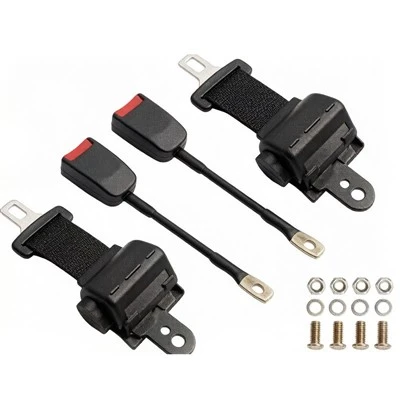
At the end of the day, seatbelt misuse in trucks isn’t a failure of technology—it’s a failure of design that doesn’t account for the real lives of the people driving the trucks. I’ve seen drivers walk away from accidents because their belt locked them in place, and I’ve seen drivers get pulled over for unbelted driving because their old belt made it impossible to get in and out without unclipping. The locking devices we develop aren’t just about “enforcing compliance”; they’re about protecting the people who spend their days on the road, often away from their families, to keep supply chains moving. If you’re a fleet owner looking to reduce seatbelt misuse, or a driver who’s struggled with old belt designs, we’re here to work with you to find the right solution. Reach out to our team to discuss your specific needs, test our devices on your trucks, and find out how we can help you keep drivers safe and compliant.
Car Seatbelt References:
- National Highway Traffic Safety Administration. (2023). Truck Seatbelt Compliance and Misuse Trends. U.S. Department of Transportation.
- American Trucking Associations. (2022). Misuse-Preventing Seatbelt Devices: Fleet Adoption and Compliance Outcomes. ATA Safety Research Institute.
- Federal Motor Carrier Safety Administration. (2023). Driver Distraction and Vehicle Ergonomics Guidelines for Heavy-Duty Trucks. FMCSA Office of Safety.
- Journal of Occupational and Environmental Safety. (2021). Locking Seatbelt Devices: Reducing Misuse in Commercial Truck Drivers. Vol. 18, No. 4.
Yangzhong Weian Mechanical and Electrical Co., Ltd.
As one of the most professional truck seatbelt manufacturers and suppliers in China, we’re featured by quality products and good service. Please rest assured to wholesale truck seatbelt in stock here and get quotation from our factory. Customized orders are welcome.
Address: Group 10, Xinhua Village, Xilaiqiao Town, Yangzhong City; West of The Bus Terminal On Yuanqu Avenue.
E-mail: hfsaml_2008@qq.com
WebSite: https://www.weianseatbelt.com/
