Let’s cut to the chase: if you work in the electronics manufacturing, semiconductor packaging, or thin-film coating spaces, you’ve almost certainly crossed paths with UF cassettes—even if you didn’t know exactly what they were, or why your whole line grinds to a halt when one goes missing or fails. For 12 years, I’ve supplied UF cassettes to fabs, R&D labs, and high-volume OEMs across North America, and I’ve lost count of how many times a plant manager has pulled me aside mid-shift, sweat on their brow, yelling that their 8-inch wafer cassette cracked overnight and they’ve got 10,000 dies set to expire on a run schedule. That’s when UF cassettes stop being a “nice-to-have” component and become the backbone of a process that keeps whole industries moving. UF Cassettes
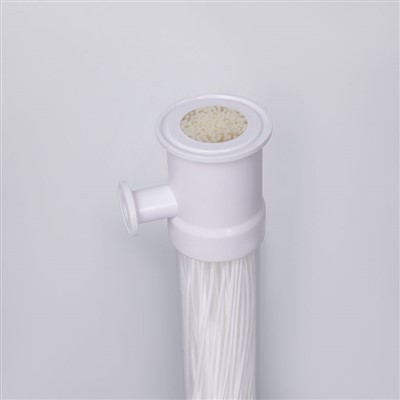
First, let’s get the basics right: UF stands for Ultra Front Opening Unified Pod. Wait—you might have heard “FOUP” thrown around too, and yes, that’s related, but a UF cassette is a specific subset of pod, built for a very different segment of the supply chain. Let’s unpack that. FOUPs are the big, heavy, semi-automated pods that high-volume fabs use to move 25 or 50 wafers through multi-step lithography and etching lines, sealed against particle contamination. UF cassettes, on the other hand, are smaller, lighter, and purpose-built for the lower-volume, higher-precision work that’s become increasingly common as semiconductor design pushes toward smaller nodes, more specialized applications, and faster time-to-market for prototype runs. Think: 2-inch to 8-inch wafers, not 12-inch; R&D labs spinning up new materials, mid-sized fabs doing small-batch custom runs, or aerospace and medical device manufacturers that need wafer-level packaging for chips that go into pacemakers or satellite sensors. They’re designed to hold anywhere from 5 to 20 wafers, depending on the application, and that compact size is intentional—it makes them easy to handle manually, which is a must when you’re moving 20 wafers a day through a lab that only has 300 square feet of cleanroom space, not a 100,000-square-foot fab with automated material handling systems (AMHS) that carry 50-wafer FOUPs like they’re luggage at an airport.
Now, let’s talk about what makes a UF cassette different from a regular wafer carrier—because that’s the comparison I get most from new customers. First, material. You can’t build a wafer holder out of cheap plastic or aluminum; even a single microscopic particle rubbing off on a wafer can ruin a $10,000 die. All UF cassettes I supply are made from aerospace-grade polyether ether ketone (PEEK) or reinforced nylon 6/6, with surface treatments that eliminate outgassing—no volatile compounds that would condense on a 2nm wafer and mess up its conductivity or adhesion. The critical design part is the slot geometry. Each slot is milled to a tolerance of ±0.001mm, so a wafer sits perfectly centered, not tilted or touching the side of the cassette. Touch is bad, even for a split second—static discharge (ESD) is the silent killer here, especially for modern wafers with nanometer-scale transistors. That’s why every UF cassette has integrated ESD-protective additives in the material, not just a thin coating that wears off after 10 uses. I once had a customer send back a cheap knockoff UF cassette that had a worn ESD coating; when they tested the wafers, 12% of them had latent ESD damage that wouldn’t show up for 6 months, ruining a $2 million batch of medical sensors. That’s the kind of mistake that makes me insist on quality over cost, every time.
Another key feature of UF cassettes: their front opening latch mechanism, which is the “Unified Pod” part of the name. Unlike old-style cassettes that you had to pry open with a screwdriver (hello, 1990s wafer tech), UF cassettes use a standard, industry-recognized latch that fits every cleanroom tool that works with small-format wafers—whether that’s a SEM (scanning electron microscope) stage, a deposition tool, or a manual alignment station. No adapting, no custom parts, no wasting 20 minutes fumbling with a non-standard carrier when you’re supposed to be running a prototype. That standardization is why the UF cassette became the go-to for R&D in the mid-2000s, when 90% of wafer work was high-volume and FOUPs dominated, but the rise of IoT and custom semiconductors created a gap for a smaller, more flexible carrier.
Wait, let’s clear up another confusion: sometimes people call these “UF pods” or “ultra-FOUPs,” but they’re not the same as the full-sized FOUPs. FOUPs are designed to be sealed for days or weeks, with built-in purge systems to keep the internal environment dry and free of contaminants. UF cassettes are more of a semi-sealed carrier—they have a thin, static-dissipative front door that keeps dust out, but they’re not meant to be stored long-term in a fab’s storage area. They’re for transport between adjacent workstations, between the lab and the tool, or between a small fab and a packaging facility. That’s not a flaw; that’s a feature. If you tried to put a 10-wafer prototype in a 50-wafer FOUP, you’d be wasting space, adding unnecessary weight, and risking damage from shifting wafers during transport. UF cassettes are sized exactly to the number of wafers you’re working with, so there’s no extra space, no movement, no risk.
Let’s get real about the pain points that UF cassettes solve, because that’s what matters to the people buying them. Last year, I worked with a startup in Austin that was developing a new type of MEMS (micro-electro-mechanical system) sensor for self-driving cars. They had 12-inch wafers that they were dicing into 2mm x 2mm sensors, but their prototype runs were only 20 wafers at a time, and they couldn’t afford to tie up their big FOUPs for 8 hours at a time while they tested each batch. A FOUP would have been overkill, and their lab didn’t have the automated handling system to move it, so we supplied them with 20 custom 8-inch UF cassettes with slots sized specifically for their thin (0.15mm) wafers—way thinner than standard 0.7mm wafers, so we had to adjust the slot geometry to keep them from bending. They cut their run time per batch by 35%, and didn’t have a single wafer damaged or contaminated in 6 months. That’s the impact a good UF cassette makes, not just a part on a bill of materials.
Another big use case: medical device manufacturing. The FDA has strict rules about traceability for semiconductor parts used in medical implants, so every UF cassette has a permanent, laser-etched ID number that can be linked to batch records. I recently upgraded my line to add 2D barcodes to every cassette, so customers can scan it on entry to a cleanroom tool and automatically pull up the batch’s material specs, manufacturing date, and inspection records. No more paper logs, no more mixing up a 2019 batch of wafers with a 2023 batch—something that would be a huge compliance violation for a medical OEM.
Now, let’s talk about what to look for when you’re buying UF cassettes, because not all suppliers are created equal. First, tolerance. Like I said earlier, slot geometry has to be ±0.001mm for thin, modern wafers. If a supplier cuts corners and only hits ±0.005mm, your wafers might sit at an angle, scratch against the slot edges, or accumulate dust between the wafer and the cassette wall. Second, material certification. You need to make sure the PEEK or nylon is certified for cleanroom use—class 10 or class 1, per SEMI standards, which is the industry body that sets all the rules for semiconductor manufacturing equipment and parts. Third, ESD protection. Cheap UF cassettes often have a conductive coating that rubs off after 50 uses. My cassettes use carbon nanotube-infused PEEK, so the ESD protection is built into the material, not applied as a surface layer—last 10,000 uses, guaranteed. Fourth, flexibility. Can a supplier make a UF cassette for non-standard wafer sizes? I’ve made cassettes for 1.5-inch wafers for MEMS research, and cassettes that hold 15 wafers for a customer that does mid-sized runs—no custom tooling fees, no 12-week lead times. A lot of big suppliers only make standard 5 or 10 wafer cassettes, so if you have a unique need, you’re stuck.
I’ve seen a lot of new customers make the mistake of buying cheap UF cassettes from Alibaba or generic industrial suppliers, and it almost always ends badly. Last year, a customer in Arizona bought 50 UF cassettes from a non-semiconductor supplier for a prototype run, and after 3 uses, 12 of the cassettes developed hairline cracks in the side walls. When we tested the material, it was regular ABS plastic, not cleanroom-grade PEEK, and it outgassed volatile compounds that left a thin film on every wafer. They had to scrap a $1.2 million batch of prototype chips, and had to wait 6 weeks for us to make and deliver custom cassettes for their next run. That’s the cost of cutting corners on a part that’s meant to protect the most valuable product in your facility.
So, who needs UF cassettes? Let’s recap, because this is for the people who are wondering if they’re in the right market. If you’re working in semiconductor R&D, mid-sized fabs, wafer-level packaging for specialty applications, aerospace sensors, medical devices, or MEMS manufacturing, UF cassettes are not a luxury—they’re a necessity. They’re lighter than FOUPs, easier to handle manually, standard across all common cleanroom tools, designed for small-batch runs, and built to keep your wafers free of contamination and damage.
Here’s the thing: when I started selling UF cassettes in 2011, most people didn’t even know they existed. They just called them “wafer holders” and bought whatever was cheapest. But over the last decade, as semiconductor design gets more complex and demand for custom, high-margin parts grows, UF cassettes have become a critical component that makes or breaks run efficiency. I’ve built my business on that—providing UF cassettes that don’t just meet industry standards, but anticipate the needs of the people using them, whether that’s a lab with one SEM or a 50-person fab doing custom runs.
If you’re dealing with wafers, if you’ve ever had a run delayed by a damaged carrier, if you’re tired of paying premium for over-sized FOUPs for small batches, or if you just want to make sure your prototypes get from the tool to the dicing machine in one piece, we can help. We work with customers of all sizes, from startup labs to Fortune 500 OEMs, and can supply standard UF cassettes in 48 hours or custom designs in 2 weeks. We also offer on-site testing for customers who want to make sure our cassettes are compatible with their existing tools, no hidden fees, no long-term contracts.

At the end of the day, semiconductor manufacturing isn’t just about the wafers or the tools—it’s about the little parts that keep everything moving. A UF cassette might not seem glamorous, but it’s the thing that catches a wafer when you’re moving it, keeps it clean when you’re not using it, and makes sure your run stays on schedule. If you’re ready to stop dealing with unreliable carriers that cause delays and waste money, let’s connect to talk through your specific needs and find the right UF cassette for your process.
UF Cassettes References
SEMI Standard E15-1100, Specification for Unified Pods (FOUPs and UF Cassettes) for Semiconductor Wafer Handling
International Organization for Standardization (ISO) 14644-1, Cleanrooms and Associated Controlled Environments — Part 1: Classification of Air Cleanliness
Semiconductor Manufacturing Technology Journal, 2022, “Small-Format Wafer Carriers: The Backbone of R&D and Specialty Semiconductor Production”
ESD Association Standard ANSI/ESD S20.20, ESD Association Standard for the Development of an Electrostatic Discharge Control Program for Protection of Electrical and Electronic Parts, Assemblies and Equipment
Hangzhou Guidling Technology Co., Ltd.
As one of the leading uf cassettes manufacturers and suppliers in China, we also support customized service. We warmly welcome you to wholesale high quality uf cassettes in stock here from our factory. For quotation, contact us now.
Address: No.795, 18th Street, Qiantang New District, Hangzhou City, Zhejiang Province, China
E-mail: export1@guidling.net
WebSite: https://www.guidlingfiltration.com/
