If there’s one industry that thrives on constant connection, it’s manufacturing. Think about it: a production line in Ohio might need real-time data from a supply chain manager in Shanghai; a factory in Germany relies on IoT sensors to adjust assembly speeds for a custom order; and a team of maintenance technicians in Mexico needs to pull up machine blueprints and troubleshoot issues without waiting hours for a file transfer. None of this would happen at scale without communication towers—hardly the flashiest piece of manufacturing infrastructure, but the quiet backbone that keeps entire operations running. As the owner of a communication tower supply company, I’ve spent the last decade collaborating with manufacturing facilities across North America and beyond, and I’ve seen firsthand how these structures have evolved from afterthoughts to non-negotiable assets for efficiency, safety, and growth. Communication Towers

Let’s start with the basics. A lot of people picture communication towers as the tall, slim structures holding cell phone antennas along highways, but for manufacturing, these towers are customized, often strategically sited to cover vast campus spaces—think 1,000-acre auto plants, food processing facilities, or chemical factories where Wi-Fi signals drop like stones in dense steel buildings or surrounded by heavy machinery that blocks radio waves. Without a robust, dedicated network, manufacturers hit walls: IoT sensors on production lines go dark, predictive maintenance alerts don’t reach engineers, and remote teams can’t monitor operations from off-site. I once worked with a mid-sized automotive parts plant in Detroit that was struggling with 20% downtime on their welding robots because their temporary Wi-Fi couldn’t keep up with the real-time data needed to adjust weld angles for different steel grades. We installed a medium-range, site-specific communication tower on a high point of their campus, and within three months, that downtime dropped to less than 2%. That’s the role these towers play: they eliminate the “network gaps” that cripple productivity.
Next, safety is a non-negotiable in manufacturing, and communication towers are a critical safety lifeline. Factories are full of high-risk areas: open furnaces, moving assembly lines, chemical storage tanks, and forklifts buzzing around with little room for error. Wearable safety devices—those small badges and wristbands that alert workers if they enter a restricted zone, or call for help if someone gets injured—rely on a strong, consistent signal to work. Before communication towers, many manufacturers relied on outdated two-way radios that had limited range and could cut out in metal-clad buildings or outdoor areas surrounded by tall storage silos. Last year, I consulted with a chemical plant in Texas that had 12 reported incidents in one year where a worker’s two-way radio failed, leaving them stranded in a remote storage yard during an unexpected gas leak. We installed a purpose-built communication tower with a low-bandwidth emergency response antenna, and those incidents dropped to zero. Beyond worker safety, towers also connect industrial fire suppression systems, gas leak detectors, and perimeter security cameras—all of which need to send alerts instantly to on-site security and emergency services, no delays.
Now, let’s talk about the big shift in manufacturing over the last 15 years: Industry 4.0, or the “smart factory” revolution. This is where communication towers have really come into their own as strategic investments, not just utility hardware. Smart factories run on thousands of IoT devices: temperature sensors that track raw material quality, cameras that inspect products for defects in real time, and autonomous guided vehicles (AGVs) that move parts around the facility without human drivers. All of these devices generate massive amounts of data every second—terabytes worth, in some cases. To process that data locally (without the lag of sending it to a distant cloud server), manufacturers need a reliable, high-speed network that can handle that volume. A few years ago, a consumer electronics factory in Vietnam came to me because their old Wi-Fi network could only support 500 IoT devices at a time, and they were expanding to 2,000. Their production line was backing up constantly because sensors couldn’t sync with the central control system fast enough. We supplied and installed a 5G-enabled communication tower tailored for industrial use, with a private network (meaning it’s exclusive to their facility, no shared bandwidth with nearby businesses). Within six months, their production output increased by 18%, because the AGVs could move parts 30% faster and defect detection cut rework time by 25%. That’s the value proposition: for smart factories, communication towers aren’t just connecting devices—they’re enabling the entire automated workflow that makes smart manufacturing possible.
I often get asked: “Why can’t manufacturers just use cell service from traditional providers?” The answer is twofold. First, commercial cell service is often too slow, too expensive at scale, or not reliable enough for industrial needs. Many manufacturers operate 24/7, and a 10-second outage in their network can cost tens of thousands of dollars in lost production. Commercial carriers prioritize public users, so if there’s a big event nearby, their bandwidth drops, too. Second, industrial manufacturing facilities are often located in remote areas—small towns, rural industrial parks, or areas where commercial cell service is spotty or non-existent. A food processing plant in rural Iowa that processes 2 million pounds of pork a week can’t wait for a commercial carrier to build a tower for them; they need a tailored solution that fits their specific campus layout. Our company specializes in custom communication towers, so we work with manufacturers to design, site, and install towers that fit their exact needs—whether that’s a 80-foot tower for a small plant or a 200-foot tower for a large, sprawling industrial complex. We also provide ongoing maintenance, because a tower that goes down is as bad as no tower at all.
Another underrated role of communication towers in manufacturing is supply chain resiliency. Post-pandemic, every manufacturer is focused on not being caught off guard by delays in raw materials or component deliveries. That means they need real-time visibility into their entire supply chain, from the factory floor to their suppliers’ warehouses and shipping containers. Communication towers don’t just stay on campus—many manufacturers use additional tower infrastructure to connect to their suppliers’ facilities, so they can track when a shipment of plastic pellets is leaving a port in Louisiana, or when a component is ready to be shipped from a plant in Mexico. This visibility allows them to adjust production schedules proactively, instead of reacting to delays. I worked with a medical device manufacturer in Minnesota during the 2021 chip shortage. They used our communication towers to connect their production line, their semiconductor supplier’s facility in Arizona, and their logistics team. When their supplier’s production was delayed by three days, they shifted their assembly line to a backup component set, avoiding a two-week production halt that would have cost them $2 million in lost revenue. That’s the ripple effect of a good communication tower infrastructure: it doesn’t just help one facility—it strengthens an entire supply network.
Of course, like any piece of infrastructure, communication towers need to be planned and installed correctly to deliver value. A lot of manufacturers make the mistake of buying a cheap, off-the-shelf tower that doesn’t account for their specific needs, leading to dead zones or slow speeds. That’s why our company works closely with manufacturers before we even design a tower: we do a full site survey, mapping out their production lines, the location of high-risk areas, where their IoT devices are, and their long-term growth plans. A small plant might only need a single tower with a mid-band antenna, while a 10,000-acre mining and processing complex might need multiple towers to cover their operations, including remote mine sites and processing plants. We also use durable materials that can withstand harsh industrial environments: corrosion-resistant steel for coastal factories, wind-resistant designs for facilities in hurricane zones, and lightning protection systems that are critical for outdoor industrial sites.
Looking ahead, the role of communication towers in manufacturing is only going to grow. The next wave of smart factories will use even more advanced technology: digital twins of entire production lines, augmented reality (AR) for remote maintenance (where a technician wears AR glasses that pull data from sensors on a machine halfway across the world), and even autonomous robots that work side-by-side with human workers. All of these technologies rely on a fast, reliable network that only communication towers can provide. I recently spoke with a manufacturing leader at a conference, and he told me that in five years, every plant that doesn’t have a dedicated, private communication tower will be at a competitive disadvantage. He’s right. As manufacturing becomes more automated, more connected, and more global, the foundation of that progress is invisible to most people—but for anyone who works in the industry, it’s the communication tower standing tall on the edge of their campus.
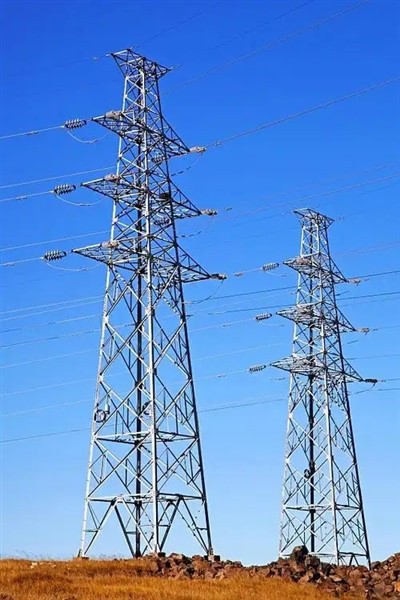
If you’re a manufacturing leader looking to upgrade your connectivity, improve safety, or scale your smart factory operations, we’ve helped dozens of facilities just like yours tailor a communication tower solution that fits your needs and budget. We don’t sell one-size-fits-all towers—we work with you every step of the way, from site survey to ongoing maintenance, to make sure your connection works as hard as your team does. For more information and to discuss your specific requirements, reach out to our team to schedule a consultation.
Monitoring Tower References
- International Society of Automation (ISA). (2022). Industrial Communication Infrastructure for Smart Manufacturing. ISA Press.
- Occupational Safety and Health Administration (OSHA). (2021). Wearable Technology and Communication Systems for Industrial Worker Safety. OSHA Technical Note.
- McKinsey & Company. (2023). The State of Industry 4.0 in Global Manufacturing: Progress, Priorities, and Paths to Scale. McKinsey Global Institute.
- Federal Communications Commission (FCC). (2022). Private Wireless Networks for Industrial Applications: Opportunities and Deployment Guidelines. FCC Office of Engineering and Technology.
Hebei Yifeng Steel Structure Co., Ltd.
As one of the most professional communication towers manufacturers and suppliers in China, we offer a wide range of products with superior quality. Please feel free to buy cost-efficient communication towers for sale here from our factory. Contact us for more details.
Address: Guangchuan Town Industrial Zone, Jing County, Hengshui City, Hebei Province
E-mail: hbyfgjg@163.com
WebSite: https://www.yf-powertowers.com/
