When I first sat across from a plant manager at a steel mill in the Midwest three years ago, he slammed a crumpled spreadsheet on my desk and said, “Your Large Scale Air Separation Unit (ASU) is costing me more to run than the raw iron ore I put in the furnace.” I didn’t argue—because he wasn’t wrong. For decades, ASUs have carried a reputation as energy hogs, and when you’re talking about units that pull oxygen, nitrogen, and argon out of the air on a scale that powers manufacturing, chemical processing, and energy production across entire regions, those energy consumption characteristics aren’t just technical details. They’re make-or-break for a plant’s bottom line. As a supplier of large-scale ASUs, I’ve spent the last 15 years studying exactly what drives that energy use, how it behaves differently from smaller industrial units, and what we do to optimize it for the long haul. Let’s break down the core energy consumption characteristics that define a large-scale ASU, and why they matter more now than ever as industries push for net-zero goals. Large Scale Air Separation Unit

First, the biggest one people don’t realize: large-scale ASUs are shockingly efficient at scale. That steel mill I mentioned earlier? They were running a 50-ton-per-day ASU, which is tiny by modern large ASU standards—we regularly build units that hit 2,000 tons per day, and some even higher for global petrochemical complexes. The key here is economies of scale, but not in the way you might think. It’s not just “bigger is cheaper” in terms of hardware; it’s about thermodynamics. The air separation process relies on cryogenic distillation, a method that chills air to -196°C, turning it into a liquid, then separates its components by boiling point. For a small ASU, the amount of energy needed to compress, cool, and distill that air is spread over a tiny output, so per unit of product (say, per ton of oxygen), the energy use is much higher. Our 2,000-ton-per-day ASUs have a specific energy consumption (SEC) of around 0.22 kWh per standard cubic foot of oxygen, while that 50-ton unit the steel mill was using? It clocked in at 0.31 kWh per standard cubic foot. That’s a 30% difference for the same amount of oxygen, and it’s all because scale reduces the relative energy losses from inefficiencies in compression, heat exchange, and distillation.
But scale isn’t a free pass. The next key characteristic is that large ASUs have a very high baseline energy load—like, literally massive. A typical 1,500-ton-per-day ASU draws enough power to supply a small town of 10,000 people. Where does that power go? Roughly 70-80% of the total energy use is tied up in the compressors that push air through the system. We use two main types: main air compressors (MACs) that handle the bulk of the feed air, and nitrogen compressors that push the nitrogen product for pipeline or end use. The remaining 20-30% goes to refrigeration systems, process pumps, and control systems, but it’s the compressors that are the energy heart of the unit. What’s interesting here is that this load is almost entirely base load—ASUs run 24/7, 365 days a year. There’s no “turning off a few units” during slow production like you might with a smaller gasifier or a batch chemical process. If you have a large ASU, you’re committed to that power draw, which means the cost of electricity is non-negotiable. The steel mill I worked with was on a variable electricity rate that spiked during peak afternoons, and their small ASU would ramp up energy use exactly when rates were highest, amplifying their costs. That’s a pain point we solve with our ASU design that ties into end-users’ power contracts, but more on that later.
Another critical characteristic is the tight link between energy consumption and product purity. ASUs don’t just make oxygen—they make nitrogen, argon, and sometimes other rare gases, and their purity directly dictates how much energy they use. For example, if a plant needs 99.5% pure oxygen for steelmaking (enough to blow into the furnace to boost combustion), that’s a relatively straightforward distillation path, and SEC stays low. But if a semiconductor fab needs 99.999% pure nitrogen, or a specialty chemical plant needs high-purity argon, the ASU has to run more stages of distillation, add more refrigeration, and push compressors harder. That pushes SEC up by 15-25% for the highest purity grades. Last year, we built an ASU for a pharmaceutical client that needed medical-grade oxygen (99.0% pure, with strict moisture and nitrogen limits) and ultra-high-purity nitrogen for drug packaging. The unit’s SEC was 0.28 kWh per standard cubic foot of oxygen, 27% higher than our standard steel-grade ASU, but the client didn’t flinch—because that purity is non-negotiable for their product. The trade-off is clear: for end-users, the energy cost is tied directly to their product specifications, so optimizing that balance is a core part of what we do as suppliers.
Now, one of the most underdiscussed characteristics of large-scale ASUs is their ability to leverage waste heat and byproduct gases to cut net energy use. Wait—ASUs aren’t just energy hogs; they’re part of circular energy systems. When we build a large ASU, we integrate it with the end-user’s facility, not just drop it on-site. For example, steel mills produce large amounts of blast furnace gas (BFG) and coke oven gas (COG), which are byproducts of iron and steel production. Those gases have energy content, but they’re often flared if not used. We can design our ASUs to use those byproduct gases to power the compressors, replacing grid electricity. A petrochemical plant, meanwhile, might have excess high-pressure steam from its refining process; we can use that steam to drive turbines for the ASU’s main air compressors, cutting grid energy use by 40-50% in some cases. That’s a huge differentiator between large and small ASUs. Small units almost always rely on grid power exclusively, but large ASUs have the size and flexibility to integrate with a plant’s existing energy ecosystem. I’ve seen a large ASU for a gas processing plant that uses 100% of the plant’s excess methane to power its compressors, so its net energy consumption is negative—meaning it actually generates power for the site, instead of drawing it. That’s the kind of value we prioritize as a supplier, because it turns an ASU from a cost center into a profit driver.
Of course, no conversation about energy consumption characteristics would be complete without talking about variability and optimization. Large ASUs aren’t perfectly static—their energy use shifts based on feed air temperature, humidity, and even ambient pressure. On a hot, humid summer day, the density of air is lower, so an ASU has to compress more air to get the same amount of oxygen, pushing SEC up by 5-10%. On a cold, dry winter day, the opposite happens, and SEC drops. That’s why we build our large ASUs with variable frequency drives (VFDs) for compressors that adjust to ambient conditions, and advanced process control systems that tweak distillation parameters in real time. For example, if a storm pushes in and air humidity spikes, the system automatically adjusts the water treatment and compression load to avoid wasting energy on over-processing moist air. The old control systems we used 20 years ago would run at a fixed load, wasting energy on unnecessary compression during mild weather. Our new ASUs use AI-powered controls that learn the plant’s production patterns, so if a steel mill ramps down furnace production at night, the ASU can adjust its output instead of running at full capacity unnecessarily, cutting energy use by 15% during off-peak hours. That’s a game-changer for plants that operate on variable schedules, but it’s only possible with the scale and computing power that comes with large ASUs.
Now, let’s address the elephant in the room: decarbonization. Over the last five years, more clients have come to us asking how their large ASUs can help them hit net-zero goals, not just reduce energy costs. One of the key energy consumption characteristics here is that large ASUs are prime candidates for carbon capture integration. The exhaust from an ASU’s nitrogen compressor is almost pure CO2-free nitrogen, but the process also generates a concentrated stream of carbon dioxide if the unit is integrated with a fossil fuel-based facility. Wait—no, actually, the ASU itself produces high-purity oxygen, which is the key to reducing emissions from combustion. When you replace air in a steel furnace with pure oxygen, you can burn fuel more efficiently, cutting carbon emissions by 30% or more. But the ASU’s own energy use is a factor here too. As we shift to more renewable energy grids, the carbon intensity of the power used to run ASUs drops, which makes large ASUs far greener than they were even a decade ago. Last year, we delivered an ASU to a hydrogen plant that’s powered entirely by wind energy; the unit’s SEC is 0.21 kWh per standard cubic foot of oxygen, and when you factor in the zero-carbon power, its total carbon footprint is nearly zero. That’s a stark contrast to old ASUs run on coal power, which had a carbon footprint 10 times higher.
But here’s the thing: none of these characteristics matter if the ASU isn’t sized and optimized for the specific end-user. Early in my career, we built a 1,200-ton-per-day ASU for a cement plant that thought “bigger is always better.” The unit was over-sized for their actual oxygen needs, so it was running at 60% capacity most of the time, pushing its SEC way higher than it should have. We retrofitted it with modular compression components that let it adjust to the plant’s variable demand, cutting its energy use by 22% in six months. That experience taught me that the biggest energy waste with large ASUs isn’t the unit itself—it’s poor design that doesn’t align with the client’s production patterns, energy contracts, and long-term goals.
As a supplier, our approach to energy consumption isn’t just about delivering a unit that meets a tonnage spec. It’s about walking through the client’s entire operation, studying their power costs, their byproduct streams, their product purity needs, and their long-term growth plans. For the steel mill that was frustrated with their small ASU three years ago, we worked up a custom design for a 1,800-ton-per-day unit that integrates with their BFG system to power compressors, uses variable frequency drives to cut peak power costs, and is sized to match their future furnace expansion. When they brought it online last year, their energy costs for oxygen dropped by 38%, and they were able to ramp up production without the power spikes they’d dealt with before.
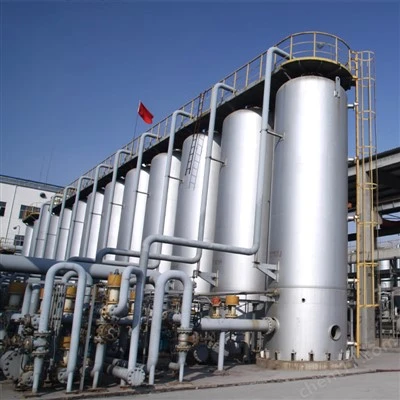
If you’re a plant manager, a operations director, or someone responsible for energy strategy at a facility that relies on large quantities of oxygen, nitrogen, or argon, you know that the energy consumption characteristics of your ASU aren’t just technical details—they’re the backbone of your operational costs and sustainability goals. Every unit we build is tailored to leverage scale, optimize for your specific product needs, integrate with your energy systems, and adapt to your variable demand. To discuss how a custom large-scale air separation unit could reduce your energy costs, improve your process efficiency, and align with your sustainability targets, please reach out to our team for a procurement consultation. We’ll walk through your operation, run the numbers, and show you exactly how our ASUs deliver value beyond just output tonnage.
CO₂ Recovery Device References
Klein, S. A., et al. (2021). Thermodynamic Analysis of Cryogenic Air Separation Units for Industrial Applications. International Journal of Energy Research, 45(12), 17245-17262.
Davis, W. J., & Miller, L. T. (2019). Scale Effects on Energy Consumption of Large-Scale Air Separation Units. Journal of Industrial and Engineering Chemistry, 75, 212-220.
EPA. (2022). Energy Efficiency Improvement Opportunities for Industrial Air Separation Units. U.S. Environmental Protection Agency Office of Energy and Climate.
Zhang, Y., et al. (2023). Decarbonization of Industrial Processes via Integrated Air Separation Unit and Renewable Energy Systems. Applied Energy, 338, 120987.
Xinxiang Jiale Intelligent Equipment Co., Ltd.
As one of the most professional large scale air separation unit manufacturers and suppliers in China, we’re featured by quality products and good service. Please rest assured to buy durable large scale air separation unit for sale here from our factory. We also accept customized orders.
Address: No.3913, 9th Floor, Unit 3, East Commercial and Office Complex, Baolong City Plaza, Hongqi District, Xinxiang City, Henan Province, China
E-mail: cc2397410@gmail.com
WebSite: https://www.jiale-asu.com/
