If you’ve ever walked through a manufacturing facility, the parts that keep machinery running—think turbine blades, medical implants, or aerospace valve components—are rarely simple. Most are curved, have tiny, intricate features, or are made from materials that resist cutting. As a grinding parts supplier, I’ve spent over a decade on the shop floor, troubleshooting issues that don’t show up in CAD files or spec sheets. The challenges of grinding complex-shaped parts aren’t just technical; they’re the kind of small, unforeseen problems that can derail a production timeline or cost a client thousands of dollars. Today, I want to break down what makes these parts so tough to grind, straight from the perspective of someone who sees these battles happen every day. Grinding Parts
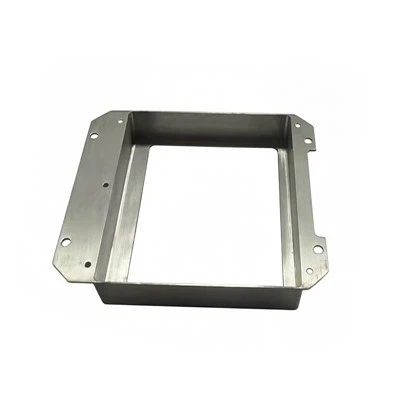
First, let’s talk about geometry. When a part is flat, or a simple cylinder, you can run a grinding wheel along a consistent path, set the machine, and let it run. Complex shapes? That’s a whole different story. Take a medical implant, like a femoral knee component. It has a curved articular surface that has to match the exact shape of a patient’s bone, plus small undercuts and holes for screws. The problem here is that every point on that curve has a different radius. If the grinding wheel is a standard size, when it moves over a tight curve, the contact area between the wheel and the part changes. Too much contact, and you create excess heat that burns the material, ruining the surface finish. Too little, and you miss the mark, leading to rework.
I remember a client who made custom hip implants a few years back. They switched from manually grinding a simpler model to a newer, more intricate one, and we had a string of rejected parts. The issue wasn’t just the curve itself—it was the transition between the curved surface and the screw holes. The tight radius around the hole meant the wheel would sometimes dig in, creating a burr that had to be filed off by hand. But hand-filing introduces human error, so every part needed a second pass on the CNC grinder, adding hours to the process. We solved that eventually by using a smaller, specialized wheel for those tight areas, but it taught me that geometry isn’t just a line on a screen—it’s a detail that dictates every tool choice and machine setting.
Next up: material properties. A lot of complex parts are made from materials that are designed to be tough, which makes them perfect for their jobs but terrible for grinding. Titanium is a big one in aerospace and medical parts. It’s lightweight, strong, and corrosion-resistant, but it has a low thermal conductivity. That means all the heat generated during grinding doesn’t spread away from the cutting area—it stays right between the wheel and the part. That heat not only burns the surface but can also cause the material to deform, even if you can’t see it right away.
Stainless steel is another culprit, especially the high-grade variants used in valves and pumps. They work harden quickly, meaning the more you grind them, the harder they get, which makes them even more resistant to cutting. I once had an aerospace client send in a batch of turbine blades made from Inconel, a superalloy that can handle extreme temperatures. We tried a standard grinding wheel first, and after 10 parts, the wheel was so worn that the surface finish was way off. The Inconel had not only harden as we ground it but also clogged the wheel—tiny particles of the material got stuck in the wheel’s pores, making it less effective. We had to switch to a diamond-impregnated wheel, which is more expensive, but it lasted three times longer and gave the consistent finish the client needed. That’s the thing about materials with complex shapes: you can’t just grab any wheel. You have to match the wheel to both the shape and the material, and even then, you might have to adjust settings on the fly.
Then there’s the issue of precision tolerances. When you’re grinding a simple part, a tolerance of 0.001 inches might be easy to hit. But for a complex-shaped part, that tolerance applies to every single point on the surface. For example, a turbine blade’s airfoil has to be within that tolerance along its entire length, and even a tiny deviation can throw off the aerodynamics, leading to reduced engine efficiency. The problem is that CNC machines have their own small errors—they can wander by a few thousandths of an inch as they move along curves, especially when they’re making tight turns. We had a client in the energy sector that makes gas turbine blades, and their tolerances were 0.0005 inches. After running a batch, we noticed that the blade tips were slightly out of spec, even though the rest of the airfoil was perfect. It turned out that the machine’s axis had a small backlash, and when it was making the sharp curve at the tip, the axis would slip just enough to throw off the measurement. We had to recalibrate the machine and add a compensation program that adjusted the tool path for that exact movement, but it took weeks of testing to get it right. The stakes here are high—miss a tolerance, and the part is scrap, which is not just a wasted material but a waste of time.
Surface finish is another challenge that’s easy to overlook. A lot of complex parts need a smooth surface, not just for function but for durability. For example, a prosthetic knee joint has to move smoothly against the bone, so a rough surface would cause friction and wear out faster. But when you’re grinding a complex shape, the wheel’s grit pattern can leave marks that show up more on curves than on flat surfaces. We once had a medical client that complained about tiny, visible scratches on the surface of their knee implants. They looked like they were from the grinding wheel, but when we checked the wheel, it was a new one. Turns out, the scratches were on the high points of the curve, where the wheel was making the most contact. We had to adjust the feed rate—slowing down how fast the wheel moved across the part—and use a finer grit wheel, but that added to the cycle time. The client understood, because they knew a poor surface finish would lead to more wear and higher failure rates later on, which was worth the extra time.
Environmental factors also play a role, even in the controlled environment of a grinding shop. Temperature changes can cause both the part and the machine to expand or contract, which throws off measurements. We work in a facility that has climate control, but on hot days, when the air conditioning is working overtime, the temperature can vary by a few degrees. That might not sound like much, but for a part with a tolerance of 0.0005 inches, a few degrees of expansion can make the part slightly larger than specified. Humidity is another factor—it can affect how the grinding fluid works, which in turn affects heat and wheel performance. On humid days, we’ve noticed that the wheel clogs more easily, because the moisture can bind the material particles in the wheel. We now monitor temperature and humidity constantly, and adjust our grinding fluid mix based on those readings, but it’s a small detail that can have a big impact on part quality.
So, what do we do as a grinding parts supplier to overcome these challenges? For us, it starts with collaboration. We don’t just get a CAD file and start grinding—we sit down with the client early in the process, before the part is even designed, to talk about how it will be made. For example, if a client is designing a complex medical implant, we can suggest a shape that’s still functional but a bit easier to grind, without compromising performance. We also invest in the right equipment—high-precision CNC grinders that can handle tight tolerances, and specialized wheels for different materials and shapes. We also have a team of experienced grinders who know how to adjust settings when something goes wrong, not just follow a pre-programmed path. Even with all the technology, the human eye and hand are still necessary to catch small issues that a machine might miss.

At the end of the day, grinding complex-shaped parts isn’t about following a set of rules. It’s about problem-solving every day, adapting to new materials and geometries, and paying attention to the tiny details that can make or break a part. If you’re working on a project that requires a grinding service for complex parts—whether it’s aerospace, medical, energy, or another industry—you need a supplier that understands these challenges and has the experience to handle them. Don’t settle for a one-size-fits-all approach. Reach out to talk about your project, and let’s work together to find a solution that meets your needs, on time and on spec.
Automation Parts References
- Todd, R. H., Allen, D. K., & Alting, L. (1994). Manufacturing Processes Reference Guide. Industrial Press Inc.
- Shaw, M. C. (1996). Metal Cutting Principles. Oxford University Press.
- Davim, J. P. (Ed.). (2013). Advanced Machining Processes for Materials and Components. Springer.
- Filter, R. (2007). Grinding of Aerospace Alloys. Society of Manufacturing Engineers.
- Bralla, J. G. (Ed.). (1998). Design for Manufacturability Handbook (2nd ed.). McGraw-Hill.
Suzhou Huaquan Electromechanical Manufacturing Co., Ltd.
As one of the leading grinding parts manufacturers in China, we warmly welcome you to buy bulk customized grinding parts made in China here from our factory. If you have any enquiry about pricelist and free sample, please feel free to email us.
Address: No.7550 Mudong Road, Hengjing Town, Wuzhong District, Suzhou City, Jiangsu Province, China
E-mail: Huaquan2005@outlook.com
WebSite: https://www.huaquancnc.com/
