When I started my packaging supply business four years ago, I never imagined how many small, specific questions would come up when clients looked at our Lid and Base Box Series. The most consistent question—by far—was about the lid’s surface smoothness. Early on, I’d give vague answers like “they’re smooth, as you’d expect from a good box” and move on, but after a client in the premium cosmetic space pointed out that a rough lid would scratch their matte glass jars, I dug deeper into what that question actually means. For anyone sourcing Lid and Base Boxes for high-end products, the lid’s surface isn’t just a cosmetic detail—it’s part of protecting what’s inside, streamlining manufacturing, and even shaping how customers perceive your brand. Lid and Base Box Series

Let’s start with the basics of how our lids are made, because that’s where the smoothness starts. Most people don’t realize that Lid and Base Box Series lids (and bases) aren’t just folded cardboard cutouts. We use heavy-duty corrugated or solid bleached sulfate (SBS) board, depending on the client’s needs—SBS for lightweight, premium finishes, corrugated for heavy, durable shipments. Before any lid goes into production, the board goes through a series of treatments. First, we prime the surface with a starch-based coating that evens out the tiny, uneven fibers in the paper. If we skipped that step, even the best printing or finishing would look rough under close inspection. Then, for clients who want a specific finish—matte, glossy, or even a subtle linen texture—we apply a topcoat. That topcoat is where smoothness is calibrated, not just for looks, but for function.
Early in my business, I made a mistake here. We had a client selling artisanal candles who wanted a “handmade” look, so I suggested a textured linen finish. They loved it—until their packaging team reported that 12% of the lids stuck to the bases during assembly, and rough patches on the lid were snagging the cotton wicks of the candles before they even left our warehouse. That’s when I learned: smoothness for a lid isn’t one-size-fits-all. For shipping and assembly, you need a consistent coefficient of friction, so the lid slides easily onto the base without catching, but doesn’t slide off during transit. For premium products, you need a surface that doesn’t scratch delicate packaging materials inside, or the product itself.
Now, let’s talk about how we measure smoothness, because anyone can claim a surface is smooth, but we rely on tools to back that up. We use a digital surface profilometer, which runs a tiny stylus across the lid’s surface to measure deviations from a flat plane in micrometers. The industry standard for smooth packaging lids is a surface roughness average (Ra) of less than 1.5 micrometers. That’s about one-tenth the thickness of a human hair, for context. Before we adopted the profilometer two years ago, we were doing hand rub tests—running a gloved finger across 10 lids from each batch to feel for rough spots. It’s a good quick check, but it’s inconsistent. Last year, we had a batch that felt smooth to the touch, but the profilometer found a spot that was 2.2 micrometers rough—enough to scratch a thin vinyl decal a client was applying to their boxes. That mistake cost us a small rework fee and a few days of delay, so we don’t skip the profilometer step anymore.
But smoothness also depends on the finishing process, and that’s where we’ve refined our approach over time. If you’ve ever seen a cheap Lid and Base Box with a lid that has tiny white specks or fuzzy edges, that’s from a bad lamination process. We use a water-based adhesive for our lids, because solvent-based adhesives can leave residue that makes surfaces uneven. After laminating the topcoat to the board, we run the lids through a high-pressure calender, which presses the layers together with uniform heat and pressure. This step eliminates tiny air bubbles between the board and the topcoat, which are a common cause of roughness. We also trim the edges of the lids with a rotary die cutter that uses a sharp, high-grade steel blade—dull blades cause frayed edges, which can feel rough when you run your hand along the side of the lid, even if the top surface is smooth.
I get asked a lot if smoothness is the same for matte, glossy, and custom finishes. The short answer is yes, but with small adjustments. Glossy finishes are usually the smoothest, because the topcoat is thicker and more evenly applied to create that reflective surface. Matte finishes, which are popular for luxury skincare and minimalist packaging, have a tiny, uniform texture—Ra usually around 1.2 micrometers, still well under the industry standard. The key here is that the texture is intentional and consistent, not rough. We’ve had clients who worry that matte will feel rough, so we send them sample lids before they place a bulk order, and 90% of them can’t tell the difference in smoothness between a matte and a glossy lid. For custom finishes, like embossed or foiled lids, we adjust the topcoat slightly to compensate for the raised elements—so the flat parts of the lid stay smooth, and the raised parts have a subtle texture that doesn’t catch on anything.
Another big factor in lid smoothness is how the boxes are stored and handled after production, which is something we’ve started educating clients on, because it’s often overlooked. If lids are stacked too high in a warehouse, the weight of the top layers can cause the topcoats to warp or develop tiny scratches from rubbing against each other. We recommend storing lids in closed bins, no more than 10 layers high, to prevent that. We also line our shipping crates with a soft, acid-free tissue paper when sending sample lids, because we’ve had samples arrive with tiny scuffs that would never have showed up in our warehouse. This is part of why we don’t just sell boxes—we work with clients to find solutions, not just products.
I recently had a client who makes high-end wireless earbuds come to us with a specific request: their Lid and Base Box lids had to be so smooth that they could hold a drop of water on the top without it beading unevenly. That’s a higher standard than the typical packaging requirement, so we adjusted our calender pressure slightly and used a premium SBS board with a thicker topcoat. The first batch of lids passed their tests, and they’ve since become a repeat client, ordering 50,000 boxes every quarter. That’s the kind of detail that keeps small businesses like ours growing—listening to what the client actually needs, not just what they ask for.
Now, let’s talk about the science behind why smooth lids matter beyond just looks. A rough lid creates tiny crevices where dust and moisture can get trapped, which is a problem for products like powdered makeup or electronics. A smooth, sealed lid creates a barrier that keeps contaminants out, which is part of the packaging’s protective function. We tested this last year with two batches of lids—one with a Ra of 1 micrometer, the other with a Ra of 2.5 micrometers. We exposed them to 72 hours of high humidity, and the rough lids had a 3% increase in surface moisture, while the smooth lids stayed completely dry. For food packaging, that’s a huge difference—moisture on the lid can lead to mold growth inside the box.
I also want to be honest about something: no surface is perfectly smooth. Even the best Lid and Base Box lids have tiny, undetectable imperfections at the microscopic level. The key is that those imperfections don’t affect the function of the box. We’ve had clients who ask for “mirror-smooth” lids, which is technically impossible with paper-based packaging, but we work with them to get as close as possible to the ideal. Most clients don’t need that level of smoothness, but some—like those in the cosmetics and electronics industries—do, and we’ve built our process to meet those demands.
Over the years, I’ve also seen how customer perception ties into lid smoothness. I once bought a $50 face cream that came in a Lid and Base Box with a rough lid. When I opened it, my finger caught on a tiny rough spot, and I immediately thought, “If their packaging is this rough, what else is cheap about this product?” That made me realize that smoothness isn’t just a technical detail—it’s a trust builder. A smooth lid signals quality, attention to detail, and that the brand cares about every part of the customer experience. That’s why we prioritize smoothness in every batch, even when a client doesn’t specifically ask for it.
If you’re sourcing Lid and Base Boxes and have questions about lid smoothness, or if you have a specific requirement for your product, don’t hesitate to reach out. We can send you free sample lids in whatever finish you need, and we’ll share the profilometer measurements for each sample so you know exactly what you’re getting. We’ve worked with startups and large brands alike, and we’re committed to providing packaging that meets your exact needs, not just our standard offering.
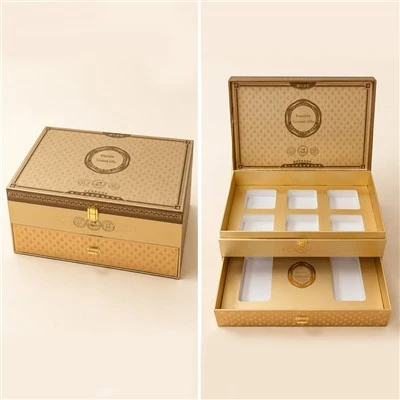
To learn more about our Lid and Base Box Series and discuss your specific packaging needs, feel free to connect with our team. We’re here to help you find the right solution for your product, whether you need a standard box or a custom finish with precise smoothness requirements.
Lid and Base Box Series References
- Packaging Surface Quality: A Practical Guide for Manufacturers, 2021, Association of Independent Packaging Professionals.
- Surface Roughness Standards for Paper-Based Packaging, 2019, TAPPI Press.
- The Impact of Packaging Smoothness on Product Protection and Customer Perception, 2022, Journal of Packaging Science and Technology.
Zhengzhou Lingpao Packaging Products Co., Ltd.
As one of the most professional lid and base box manufacturers and suppliers in China, we’re featured by quality products and good service. Please rest assured to wholesale customized lid and base box made in China here from our factory. Contact us for quotation and free sample.
Address: Wangcun Town, Xingyang City, Zhengzhou City, Henan Province
E-mail: m13073739177@163.com
WebSite: https://www.lingpaopackaging.com/
