If you’ve ever spent time on the shop floor with electrical design engineers or production line technicians, you’ve probably heard a mix of groans and head-scratches when someone mentions a Hipot tester’s pre-charge time setting. Most folks new to high-voltage testing just want to plug in a unit, dial in a voltage, and hit “start”—why would they need to wait (or even set) a period before the actual test kicks off? Let’s break this down, since I’m the Hipot tester guy you’d hit up for real answers, not just textbook jargon. As a supplier, I’ve seen way too many tests go wrong, parts get rejected unnecessarily, or even worse, weird “false failures” that make customers question both their products and their test gear. Pre-charge time isn’t some random setting we manufacturers throw in to make the tester more complicated—it’s there to save you time, money, and a whole lot of headaches. Hipot Tester
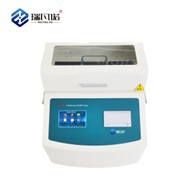
First, let’s get super basic about what a Hipot test actually is, for anyone who’s not deep in this daily. Hipot (short for “high potential”) testing slams a way higher AC or DC voltage across two parts of an electrical component—like the live wire and the chassis, or two separate circuit boards in an appliance—to make sure there’s no insulation breakdown. If the insulation is weak, that high voltage will punch through it, creating a short circuit or a current leak that the tester picks up and flags as a failure. Makes sense, right? The trick is, high voltage doesn’t just show up instantly in a component. Think of it like filling a bucket with a garden hose: if you turn the hose all the way on at once, the bucket sloshes, spills, and splatters all over the place before it’s actually full. Same thing with electrical components—they act like capacitors, which store electrical charge. When you crank 10kV through a cable or a transformer, the component needs time to charge up to that voltage, not just jump straight there. That’s the pre-charge setting doing its thing.
Let’s get into the nitty-gritty of why skipping pre-charge is a bad call, because I’ve heard every excuse in the book from production leads who want to speed up their line. Last year, we worked with a small appliance maker in Ohio that was rejecting 12% of their new space heaters during final testing. They were running their Hipot test with a 0-second pre-charge, so the tester was dumping full 5kV DC straight into each heater’s insulation. The first problem here: capacitive components (even small ones, like a 1-inch copper wire wrapped in plastic) have what’s called “inrush current.” When you apply full high voltage instantly, that inrush current is way higher than the steady-state leakage current we actually care about for the test. So the tester would see that big spike and incorrectly flag a pass as a failure—total false alarm. They were tossing perfectly good units and chasing down faulty test leads, all because they skipped pre-charge. We adjusted their pre-charge time to 500 milliseconds, and their false failure rate dropped to less than 0.5% overnight. That’s the kind of win that makes our job worth it.
Another big one: insulation polarization. Wait, that sounds like a physics buzzword, but it’s actually super simple. Insulation materials (think plastic, rubber, ceramic) aren’t perfect. When you apply a strong electric field (that’s what high voltage is) across them, the tiny molecules in the insulation line up in the direction of the field. That process takes time—usually between 200ms and 2 seconds, depending on the material. If you yank the voltage up instantly, those molecules don’t have time to align, so the initial current reading is way off. For example, a power tool manufacturer we partnered with a while back was testing their lithium-ion battery packs. Their original test protocol used a 1-second pre-charge, but their quality team decided to cut it to 300ms to speed up the line. What they didn’t know was that their battery’s heat-shrink insulation takes exactly 450ms to polarize fully. The test would measure the pre-polarization current, which was 3x higher than the actual steady leakage current, so they thought every other pack was bad. They ended up wasting $18k in materials in a month before they came to us. Once we fixed the pre-charge time, they kept their line speed and no longer had to throw away good batteries.
Wait, but hold on—isn’t pre-charge just for DC Hipot tests? Nope, AC Hipot testers use it too, I promise. AC is alternating current, so it’s changing direction 50 or 60 times a second, but capacitive charging still applies. In AC testing, the pre-charge period lets the component’s capacitance adjust to the alternating field, which prevents voltage spikes that can damage sensitive parts, too. I’ve seen a medical device maker blow $200k worth of pacemaker prototypes because they ran an AC Hipot test with no pre-charge. The sudden voltage spike shorted the microchips in the prototypes, and they couldn’t figure out why for weeks. That’s the kind of loss that makes pre-charge not just a “nice setting”—it’s a protective feature.
Now, let’s talk about how the pre-charge setting interacts with other test parameters, because it’s not a set-it-and-forget-it number. It depends on three big factors: 1) the size of the component (bigger parts with more capacitance need longer pre-charge), 2) the test voltage (higher voltage needs more time for polarization), and 3) the insulation material (rubber takes longer than epoxy, for example). For example, a small wall adapter with a 10µF capacitor might only need 200ms of pre-charge, while a large industrial motor with 100µF of insulation might need 2 full seconds of pre-charge. That’s why a good Hipot tester lets you adjust this setting, not just lock it to one default. A lot of cheap testers on the market have a fixed 0 or 100ms pre-charge, which is useless for most production lines. As a supplier, we build our testers with adjustable pre-charge from 0ms up to 10 seconds, so our customers can tweak it exactly to their part’s needs.
Another common question: can pre-charge time cause a bottleneck on the production line? That’s a fair call—you don’t want a 2-second pre-charge adding 2 seconds to every unit’s test time, which slows down line throughput. The key is to optimize it, not just max it out. You can use an oscilloscope to check when the component’s voltage has stabilized at your test level—when the waveform is flat, not still climbing— that’s when the pre-charge period is done. For most consumer electronics, that’s 300ms to 1 second, which adds negligible time per unit but eliminates all the false failures. We’ve helped customers calculate their ideal pre-charge time so they get the test accuracy they need without hurting their line speed.
Let’s also bust a myth I hear all the time: “We’ve tested this part 1000 times, pre-charge doesn’t matter.” Yeah, that works for a sample, but production testing is different. Samples are small batches, you’re not running 10,000 units a day. The minor variations in components—from slight differences in insulation thickness to tiny variances in capacitor size—mean that pre-charge is non-negotiable for consistent results. I’ve seen a customer who only tested pre-charge on their prototype, not their production parts, and they had a recall of 50,000 power cords because 1% had insulation that failed the test due to a missing pre-charge step. Pre-charge isn’t just for prototypes—it’s for every unit that comes off the line.
So, what should you actually do with this setting? First, stop treating pre-charge like an afterthought. If you’re getting weird, random Hipot failures that don’t make sense (a unit passes every other test, or a new part batch fails out of nowhere), the first thing to check is your pre-charge time. Start with your component’s spec—most insulation manufacturers will tell you the required polarization time for their material. If that’s not available, test it: use an oscilloscope to measure when the test voltage stabilizes on your part, and set your pre-charge time to that. And if your current Hipot tester doesn’t let you adjust pre-charge, or you’re still getting false failures even with the right setting, it might be time to upgrade to a tester that gives you control over this and other test parameters.
As a Hipot tester supplier, I get that everyone’s focused on test voltage, current thresholds, and line speed. But pre-charge is one of those small settings that makes a huge difference in both test accuracy and your bottom line. It’s not a fluff feature—it’s a safeguard against false rejects, damaged parts, and costly recalls. If you’re tired of throwing away good products or dealing with test results that don’t line up with your quality standards, let’s talk. We don’t just sell testers—we help you set up the right pre-charge time and test protocol for your exact parts, so you get reliable results without slowing down your line.
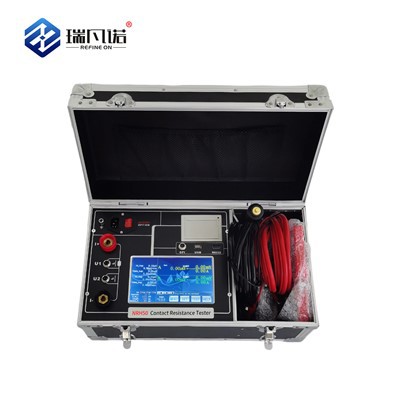
Ready to stop guessing and start getting accurate, consistent Hipot test results? Reach out and we can walk you through how to optimize your pre-charge setting, or help you pick a tester that fits your production needs. No jargon, no hard sells—just real answers from someone who’s been on the shop floor with you.
Hipot Tester References
- International Electrotechnical Commission (IEC) 60335-1: Safety of Household and Similar Electrical Appliances, General Requirements, 2020.
- UL 60950-1: Safety of Information Technology Equipment, Part 1: General Requirements, 2019.
- Electrical Engineering Handbook, R.C. Dorf, High Voltage Testing and Insulation Testing, 6th Edition, 2021.
- Factory Mutual (FM) Global: Guidelines for Hipot Testing of Electrical Components for Industrial Applications, 2022.
- White Paper: “Reducing False Failures in Production Hipot Testing,” Test Equipment Manufacturers Association, 2023.
Refine On (Hebei) Electric Power Technology Co., Ltd.
Refine On (Hebei) Electric Power Technology Co., Ltd. is one of the most reliable hipot tester manufacturers and suppliers in China, also supports customized service. Please feel free to wholesale advanced hipot tester at competitive price from our factory. Contact us for quotation.
Address: Building 13, Liandong U Valley, No.64, Jing SAN South Street, Economic Development Zone, Mancheng District, Baoding City, China
E-mail: victor@transformer-test.com
WebSite: https://www.transformer-test.com/
